Midlife Career Change: Is an Online Business the Best Option After 50?

You’ve spent decades building a career. You’ve shown up, worked hard, and done what you were supposed to do. And yet, somewhere along the way, something started to feel off.
Maybe you’re burned out. Maybe the job that once felt meaningful doesn’t anymore. Maybe you’ve just hit a point where you’re asking yourself: is this really it for the next 15 years?
If that sounds familiar, you’re not alone. Midlife career changes are more common than most people talk about, and if you’re over 50 and wondering what your options actually are, this post is for you.
I’m not going to give you a list of “hot careers for people over 50” or tell you to go back to school. Instead, I want to share something that changed everything for me: the idea that an online business might be the most realistic, flexible, and fulfilling path forward—even if you’re starting completely from scratch.
Why Midlife Career Changes Are More Common Than You Think
There’s a reason so many people in their 50s start quietly Googling “career change at 50” at 11pm. It’s not a crisis. It’s clarity.
After decades in the workforce, most people have a much better sense of what they actually want—and what they’re no longer willing to put up with. Long commutes. Office politics. Work that doesn’t align with their values. A schedule that leaves no room for anything else.
Add to that the reality of ageism in the job market. It’s real, it’s frustrating, and it’s something a lot of people over 50 run into when they start exploring traditional career pivots. Sending out resumes and hearing nothing back. Being “overqualified.” Watching younger candidates get opportunities that your experience should have made you a shoo-in for.
None of this means you’re stuck. It just means the traditional path has some real obstacles, and it’s worth knowing that before you go down it.
Why Traditional Career Pivots Are Harder After 50
Let’s be honest about this, because I think a lot of career advice glosses over it.
Going back to school or retraining for a new field takes time and money, often a lot of both. And while that’s absolutely worth it for some people, it’s not the right fit for everyone, especially if you’re looking for more flexibility, not less.
There’s also the energy factor. After a long career, many people aren’t looking to start over at the bottom of a new industry, working their way up again from scratch. They want something that respects the experience they already have and gives them more control over their time.
That’s where online business comes in—and why I think it deserves a serious look.
Why Online Business Fits Midlife Specifically
Here’s what nobody tells you when you’re researching midlife career change ideas: the skills and life experience you’ve built over 30+ years are genuinely valuable in the online space.
You know how to communicate. You understand people. You’ve solved real problems in the real world. That’s not nothing—that’s actually the foundation of a good online business.
A few other reasons this path fits midlife well:
- Flexibility. You work when and where you want. No commute, no office hours, no asking permission to take a Tuesday afternoon off.
- Low startup cost. Unlike a traditional business, you don’t need a storefront, inventory, or a big upfront investment. A laptop and an internet connection are enough to get started.
- You can build gradually. There’s no all-or-nothing leap required. Many people start their online business alongside their current job and transition over time.
- Your experience is an asset. Whatever industry you’ve worked in, whatever problems you’ve solved—there are people out there who want to learn from someone like you.
What It Actually Takes (Honest Expectations)
I want to be straight with you here, because I think you deserve honesty more than hype.
Building an online business takes time. It takes consistency. And it takes a willingness to learn things that might feel completely foreign at first—things like SEO, email marketing, and content creation.
I started this blog after leaving a 33-year corporate career, with no tech background and no marketing experience. Read my story here. It was overwhelming at times. There were moments I questioned whether I was too old, too behind, too far out of my depth.
But here’s what I’ve learned: the learning curve is real, but it’s not insurmountable. And the people who succeed aren’t necessarily the most tech-savvy—they’re the ones who keep going.
The mindset shift from employee to entrepreneur is probably the biggest adjustment. You’re no longer waiting for someone to tell you what to do. You’re building something of your own, on your own terms. That’s both exciting and terrifying—sometimes at the same time.
Where to Start If You’re Considering This Path
If any of this is resonating with you, here’s a simple place to begin:
Step 1: Get clear on what you want your life to look like. Before you think about business models or niches, think about your life. How do you want to spend your time? What does a good day look like? What are you no longer willing to compromise on?
Step 2: Explore what type of online business fits you. Blogging, affiliate marketing, coaching, freelancing, digital products—there are more options than most people realize. You don’t need to figure it all out at once, but it helps to understand what’s out there.
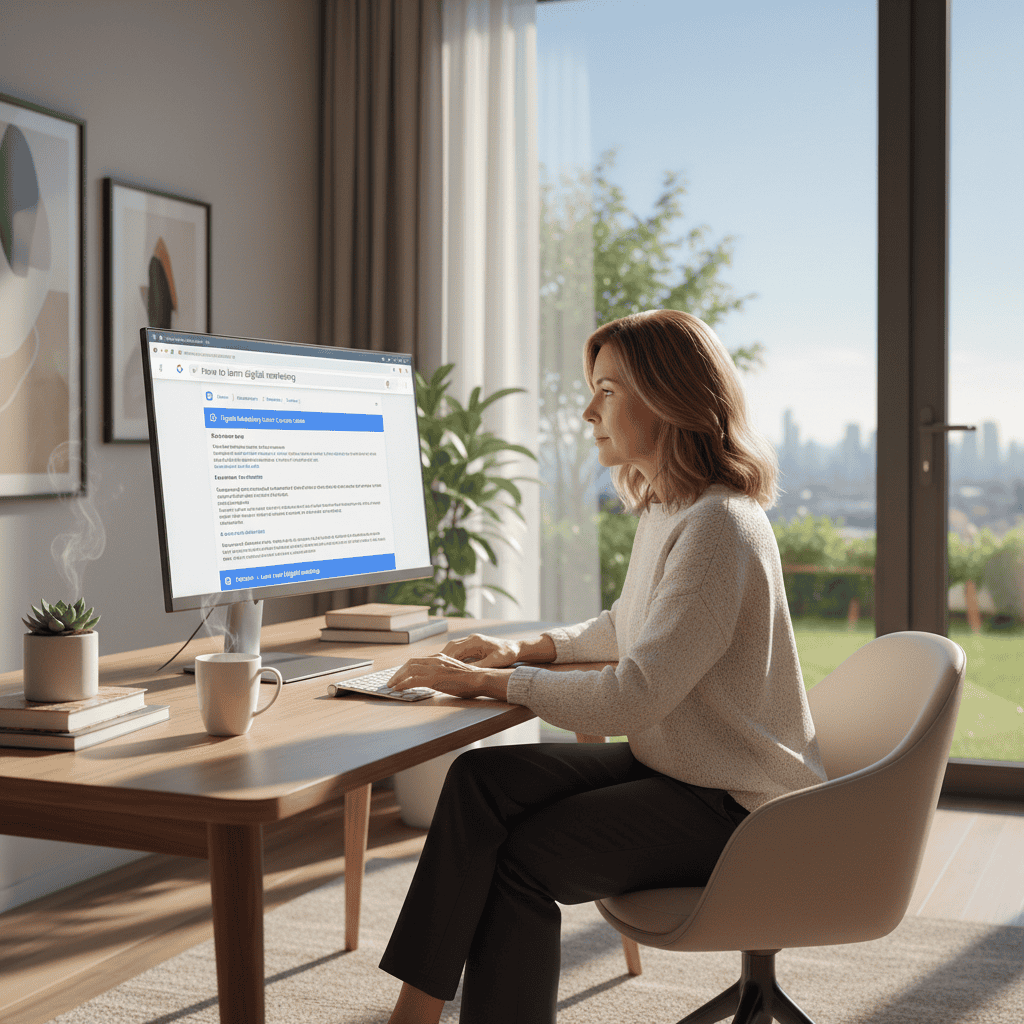
Step 3: Learn before you leap — but don’t let learning become a delay tactic. There are free and paid ways to learn digital marketing. Both have merit. What matters is that you actually start applying what you learn, not just collecting information indefinitely. (I say this as someone who spent years doing exactly that.) To see how I learned, click HERE.
Step 4: Start before you feel ready.I waited four years to start. Four years of “I’ll do it when I know more” and “I’m not ready yet.” Read Why I Started HERE. The honest truth? You never feel fully ready. You just start anyway.
Is It Too Late to Change Careers at 50?
No. And I want to be clear about why.
“Too late” implies there’s a deadline—some point after which your options run out. But that’s not how this works. People are building online businesses in their 50s, 60s, and beyond. The internet doesn’t check your age before letting you publish a blog post or recommend a product you genuinely believe in.
What you have at 50 that you didn’t have at 25 is perspective. Patience. A clearer sense of who you are and what you actually want. Those aren’t liabilities—they’re advantages.
You’re not starting over. You’re starting with more.
Final Thoughts
A midlife career change doesn’t have to mean going back to school, updating your resume, or hoping someone gives you a chance. It can mean building something of your own—something flexible, something meaningful, something that fits the life you actually want to live.
That’s what I’m doing. And if you’re reading this, I have a feeling it might be what you’re looking for too.
If you’re not sure where to begin, I put together a free Beginner’s Roadmap that walks you through the first steps of starting an online business—no jargon, no overwhelm, just a clear starting point. Grab your copy by clicking the button below.
Frequently Asked Questions
Is it realistic to start an online business after 50? Yes—and in some ways, it’s easier than starting younger. You bring life experience, patience, and a clearer sense of purpose that younger entrepreneurs often have to develop over time.
How long does it take to make money from an online business? It varies widely. Most people start seeing results within 6–12 months of consistent effort, but it depends on the business model, how much time you invest, and how quickly you learn. Realistic expectations matter more than timelines.
Do I need tech skills to start an online business? No. I started with zero tech skills and figured it out as I went. Most of the tools available today are designed for beginners, and there are plenty of free resources to help you learn.
What’s the best type of online business for someone over 50? There’s no single answer—it depends on your interests, skills, and goals. Blogging, affiliate marketing, digital products and coaching are all popular options for midlifers because they have low startup costs and can be built gradually alongside other commitments.